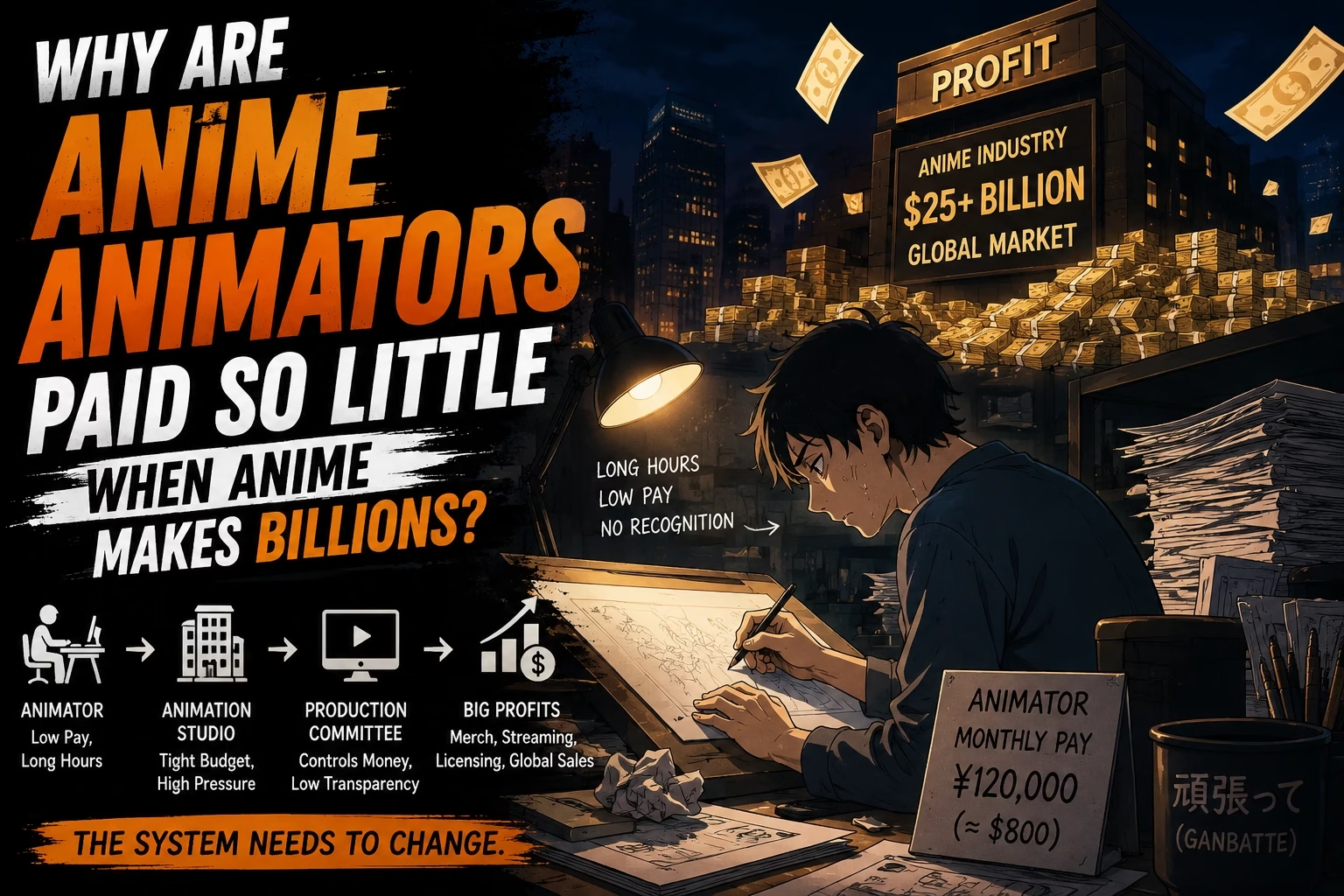
If you are an anime fan, then you have probably heard sometime that, in the anime industry, some of the least-paid people are anime animators. And you may have also thought, “But why?”
When anime makes this much money, why are the main pillars of anime — the animators — getting paid so little compared to how much money the anime industry earns?
We all know how popular anime is in the current time. Demon Slayer, Jujutsu Kaisen — and before them, there were anime like Dragon Ball, Naruto, One Piece, and many more.
Millions of people watch these shows. Fans buy manga, action figures, games, Blu-rays, clothing and collectibles. Streaming services pay for anime, and some anime movies can even become global hits.
So, if you have also had this question and never really got a proper answer, you are at the right place.
Today, we are going to see:
Why are anime animators paid so little when anime makes billions?
If anime is making billions, why aren’t the people who actually draw it making billions too?
The surprising answer is that the problem isn’t simply that anime doesn’t make enough money.
The real problem is where that money goes.
But before we start, if you haven’t subscribed to our newsletter, subscribe so you don’t miss this type of anime content, along with anime news, anime recommendations, and more things related to anime.
Only the first 100 subscribers are free, then it will be subscription-based.
Subscribe to our newsletter!
So, let’s go.
Anime Is Making More Money Than Ever
Let’s start with the biggest number.
According to the Association of Japanese Animations, the broad Japanese anime market reached ¥3.8407 trillion in 2024, an all-time record. The domestic market was ¥1.6705 trillion, while the overseas market reached ¥2.1702 trillion. That means the overseas market alone accounted for more than half of the total anime market.
That sounds incredible, right? But here’s the catch. The same AJA data estimates the much narrower market for commercial anime production companies at ¥466.2 billion. Those two numbers are not contradictory. They measure different things.
The ¥3.8407 trillion figure represents the much broader money generated through the anime ecosystem. That includes things such as merchandise, streaming, licensing, games, music, theatrical releases and other anime-related businesses.
The ¥466.2 billion figure is much closer to the actual business of commercial anime production. So, when you see a headline saying:
“The anime industry is worth trillions of yen!”
Don’t imagine a giant vault at an animation studio filled with all that money. The money is spread across an enormous ecosystem. And that’s where the animator problem begins.
Let’s Understand This by Using Our Favourite Anime Franchises as an Example
Imagine One Piece for a moment. Someone watches an episode on a streaming service. Another fan buys a manga volume. Someone else buys a Luffy figure. Another person buys a One Piece game. Someone buys a T-shirt. Another fan goes to a One Piece movie. All of these transactions can be connected to the popularity of the same intellectual property, or IP.
But they are not the same transaction. The animator who spent hours drawing a scene of Luffy fighting an enemy isn’t personally receiving a percentage of every figure sold in a store or every manga volume sold.
That’s because anime is not only an animation business. It is also a huge intellectual-property business. The animation gets the characters onto the screen. Then that popular character can make money in dozens of other places. And this is where things start getting really interesting.
Related Post: Top 24 Strongest Hunter × Hunter Characters Ranked — Based on Feats, Nen Abilities, Statements & Potential
How Big Can an Anime IP Become? Let’s Take Dragon Ball as an Example
For those who don’t know, IP means Intellectual Property. In simple words, when we talk about the Dragon Ball IP, we are talking about the Dragon Ball franchise and the commercial rights and businesses connected to it. And Dragon Ball is a perfect example of how big an anime franchise can become.
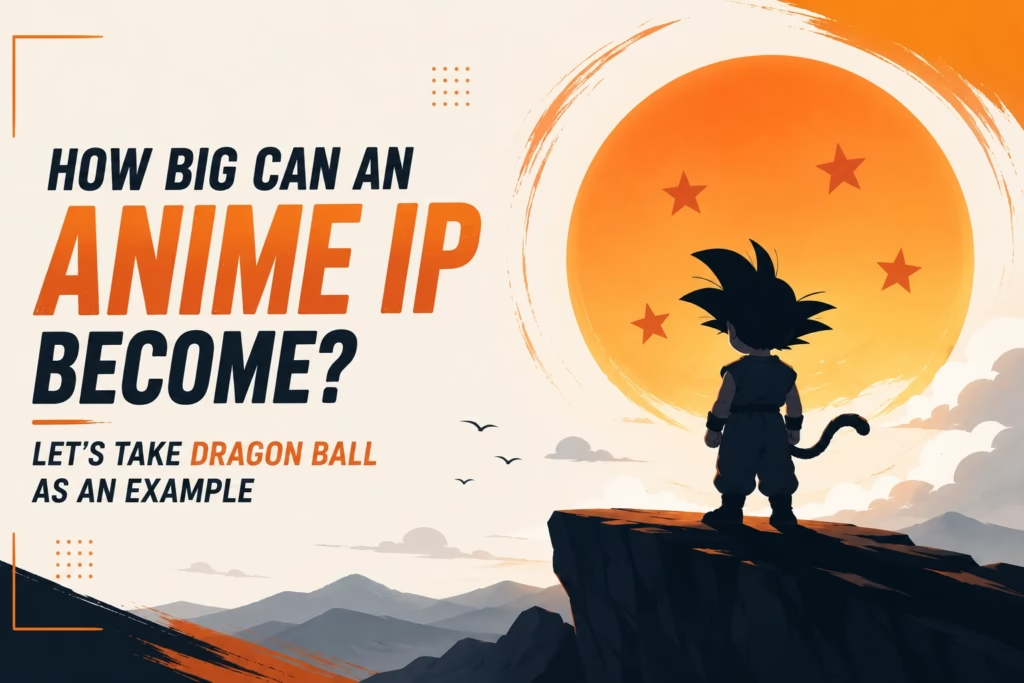
Bandai Namco reported ¥190.6 billion in sales connected to the Dragon Ball IP in FY2025.
And for comparison:
Gundam — ¥153.5 billion
One Piece — ¥139.5 billion
Naruto — ¥26.9 billion
Those are some massive numbers. But there’s an important detail that is easy to miss. These are Bandai Namco’s sales connected to those franchises. They are not the amount of money paid to the anime studio, and they are certainly not the salaries of the animators.
Think about Dragon Ball.
- The anime creates demand.
- Then come the games.
- Then figures.
- Then toys.
- Then clothing.
- Then licensing.
- Then events.
And many other products and businesses connected to the franchise. So the economic value of an anime franchise can become much larger than the budget of the anime itself. This is why we can’t simply look at a huge franchise number and say:
“Well, if Dragon Ball made ¥190.6 billion, why can’t the animators be paid more?”
The better question is:
“Where did that ¥190.6 billion come from, and which part of the business received it?”
That’s a very different question.
The People Drawing the Anime Can Be Much Lower Down the Money Chain
Now we get to the people who actually make the animation. JAniCA’s 2026 Animation Creators Survey collected 983 valid responses from people involved in commercial animation production in Japan. Across the different creator professions surveyed, the average annual income was around ¥4.45 million, with a median of around ¥4 million.
But that average can be misleading. Why?
Because “animation creator” includes many different jobs. A director isn’t earning the same amount as an in-between animator. A storyboard artist isn’t necessarily earning the same amount as a second key animator. And that is a big key difference. JAniCA’s figures show approximate average annual incomes of:
Director — ¥7.338 million
Storyboard — ¥6.401 million
Design — ¥6.663 million
Animation supervisor — ¥5.215 million
Layout/first key animation — ¥4.143 million
Second key animation — ¥2.140 million
In-between animation — ¥2.275 million
Suddenly, the phrase “anime animator salary” becomes much harder to define. The industry isn’t one giant group getting the same paycheck. There is a huge financial gap between different stages of the production pipeline.
Related Post: Why Are Anime Animators Paid So Little When Anime Makes Billions?
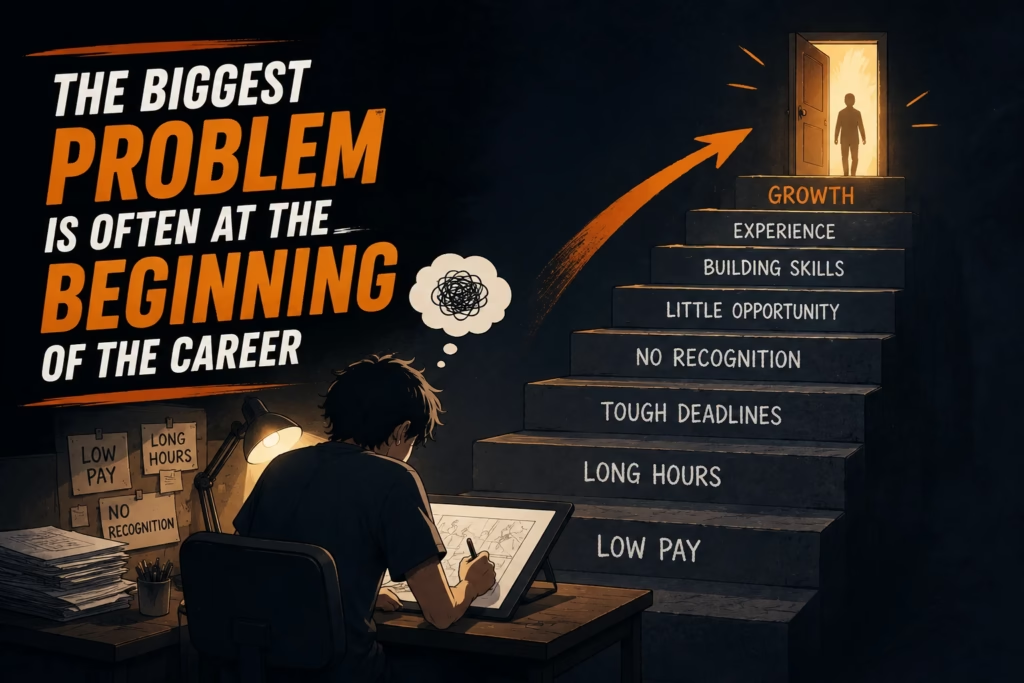
The Biggest Problem Is Often at the Beginning of the Career
Now imagine you are 20 or 21 years old. You grew up watching Naruto, Dragon Ball, One Piece, Demon Slayer, or Jujutsu Kaisen. You love anime so much that you decide:
“I want to make anime too.”
You learn how to draw, practice animation, build your skills and finally enter the industry. You might expect that working on a popular anime means you are going to earn a lot of money. But the reality can be very different. According to JAniCA’s 2026 survey, animation creators aged 20–24 had an average annual income of around ¥2.002 million.
For creators aged 25–29, the average was around ¥3.079 million.
The numbers rise with experience. For creators aged 40–44, the average was around ¥5.96 million. So one of the biggest problems is not only the final salary. It is the early years of the career. You can spend years learning animation before reaching the more senior positions that pay significantly more.
And this is important because animation is a skill-based industry. You can’t simply become an expert animator in a few months. It takes years of practice and experience.
But Why Doesn’t the Huge Anime Money Reach Them?
Now we finally get to the main question. Why doesn’t all that money reach the animators? The simple answer is:
Because the money made by an anime is divided between many different parts of the business.
A major anime can involve publishers, broadcasters, distributors, streaming companies, music companies, merchandise companies, investors, licensing businesses and animation studios.
So the money does not simply go like this:
Fan → Anime Studio → Animator
It’s much more complicated.
A better way to imagine it is:
Fan spends money
↓
Streaming / cinema / manga / games / merchandise
↓
Different companies and rights holders
↓
Production and business partners
↓
Animation studio
↓
Other production companies and workers
↓
Animators
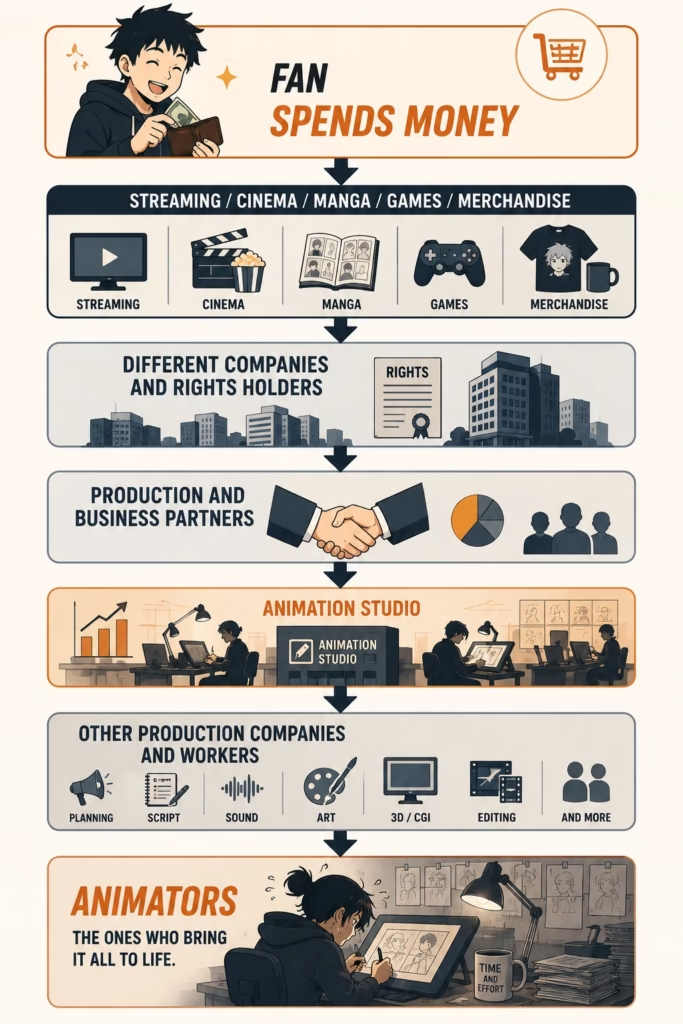
That doesn’t mean every anime follows exactly the same system. But it helps explain one very important thing:
The person drawing the anime is only one part of a much bigger business.
The Production Committee Makes Things Even More Complicated
You’ve probably heard the term production committee before. Basically, multiple companies can come together to finance and manage the commercial side of an anime project. Instead of one company paying for everything and owning everything, different companies can have different interests in the project.
For example, a publisher may be involved because it owns the original manga.
- A broadcaster may want television rights.
- A music company may be involved in the soundtrack.
- A toy or merchandise company may want commercial opportunities.
- A streaming company may want distribution rights.
- And an animation studio may be responsible for actually producing the anime.
So when an anime becomes a giant success, there can be many companies involved in the money generated by that success.
This is why saying:
“The anime made billions, so the studio should have billions”
doesn’t really work.
The studio may have received a production fee or have a specific stake in the project, but that doesn’t automatically mean it owns all the money generated by the anime.
But Wait — Doesn’t the Studio Get Paid?
Yes. The animation studio gets paid. The problem is that getting paid is not the same thing as making enormous profits. This is another part that people often misunderstand.
You might think:
“Okay, maybe the animators don’t get all the money, but the studio must still be swimming in cash.”
Not necessarily.
According to Teikoku Databank, Japan’s anime production market reached about ¥406.6 billion in 2025.
But at the same time, 34.6% of anime production companies were loss-making in the report’s 2025 analysis.
That’s crazy, right? The industry is growing. Demand is increasing. Anime is more popular around the world.
And yet a significant number of production companies are still struggling to make a profit.
Why?
Because production is becoming more expensive too.
Studios have to deal with labor costs, outsourcing costs, staff shortages and production delays.
So having more anime projects doesn’t automatically mean every studio becomes richer.
Related Post: 7 Underrated Anime Perfect for a Weekend Binge
More Anime Also Means More Pressure
Think about how many anime are being released today. Every season, we get new series. Then there are sequels. Movies. Spin-offs. Original anime. Streaming exclusives. And some of the biggest franchises are producing multiple projects at the same time. But there is one thing all of those projects need:
People.
- You still need animators.
- You still need animation directors.
- You need key animators.
- You need in-between animators.
- You need background artists, compositors, production staff and many others.
And experienced animators aren’t something a studio can create overnight.
Japan’s Cultural Affairs Agency has identified the shortage of human resources in animation production as a serious issue, while industry research has also pointed to animator shortages, increasing labor and outsourcing costs, and production delays.
So now we have another strange situation:
Anime demand is going up, but the number of experienced people capable of producing that anime isn’t increasing fast enough.
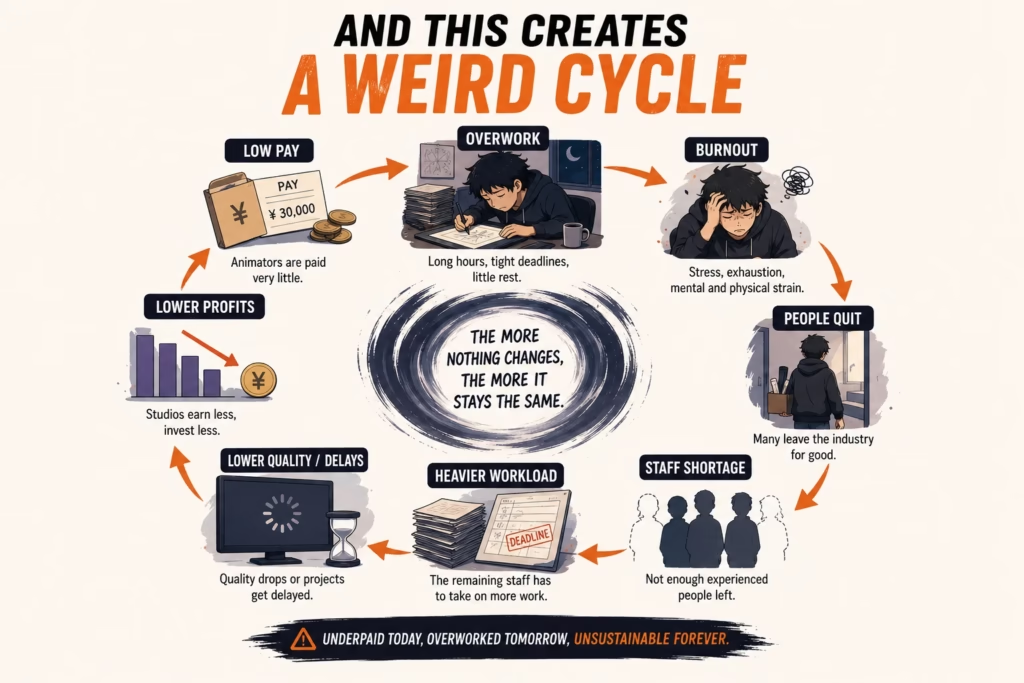
And This Creates a Weird Cycle
Think about what happens when demand keeps increasing. More anime is ordered. Studios need more workers. Studios outsource more work. Outsourcing costs rise. Studios compete for experienced animators. Production becomes harder and more expensive.
Delays can happen. And the studio’s profit can get squeezed. Teikoku Databank has pointed out that some anime production companies can take on a large amount of work while their costs increase faster than their revenue.
So sometimes:
More work doesn’t mean more profit.
That sounds strange, but it makes sense when you look at the costs involved. Imagine you run a restaurant. Suddenly, twice as many customers start coming. Sounds great, right?
But then the cost of ingredients doubles. You need more employees. Your rent increases. Your electricity bill increases. And your delivery costs go up.
You now have more customers and more revenue, but your profit may not increase much.
Anime production can face a similar problem.
So Why Do Some People in Anime Make Much More?
Because the animation industry rewards experience, specialization and responsibility differently.
The person who draws one part of a scene isn’t in the same position as someone supervising an entire episode or directing a production. This is why the JAniCA numbers are so different.
A director averaged around ¥7.338 million. A second key animator averaged around ¥2.14 million. An in-between animator averaged around ¥2.275 million.
That’s a very big difference. And this tells us something important:
The problem isn’t simply “every anime animator is poor.”
The problem is that some of the people at the lower levels of the production pipeline can earn much less than senior creators, even though their work is essential to producing the final anime.
Then What Happens When an Anime Becomes a Huge Hit?
This is where the story gets even more interesting. Imagine a new anime comes out. Nobody knows whether it will become successful.
The first season airs. Fans love it. Suddenly, social media is full of clips. The manga starts getting more attention. Streaming numbers rise.
A movie gets announced. Figures start selling. A game gets announced. Merchandise appears everywhere.
Suddenly the franchise is worth much more than it was before the anime aired. But the animator who worked on the original episodes doesn’t automatically receive a share of every new product sold.
The person who drew a five-second fight scene doesn’t suddenly receive money every time a figure of that character is sold. And that is one of the biggest reasons anime’s financial success can look confusing from the outside.
The value of the franchise can grow much faster than the salary of the person who created the animation.
Conclusion
So, Why Are Anime Animators Paid So Little?
After looking at all of this, the answer is actually much simpler than it first appears. Anime makes a huge amount of money, but that money does not all go to animation production.
The anime industry is a massive ecosystem. A successful anime can make money through streaming, television, movies, games, manga, merchandise, licensing, music, toys and many other businesses.
The money is divided among different companies, rights holders and business partners. And the animation studio is only one part of that system.
Then, inside the animation studio, different workers also have very different income levels. A director can earn considerably more than a second key animator or an in-between animator.
And the people at the beginning of their careers can be in an even more difficult position.
So the next time you watch an incredible Demon Slayer fight, a crazy Jujutsu Kaisen sequence, a One Piece episode or a classic Dragon Ball battle, remember one thing.
The billions connected to an anime franchise don’t all belong to the people who drew the animation.
The anime you see on your screen is only one part of a much bigger business.
And perhaps that is the real problem.
Anime has figured out how to make billions from its characters and stories.
The bigger challenge now is figuring out how the people who bring those characters and stories to life can receive a fairer share of the value they help create.
comment your thoughts on this in comment section.
Aniworldtv